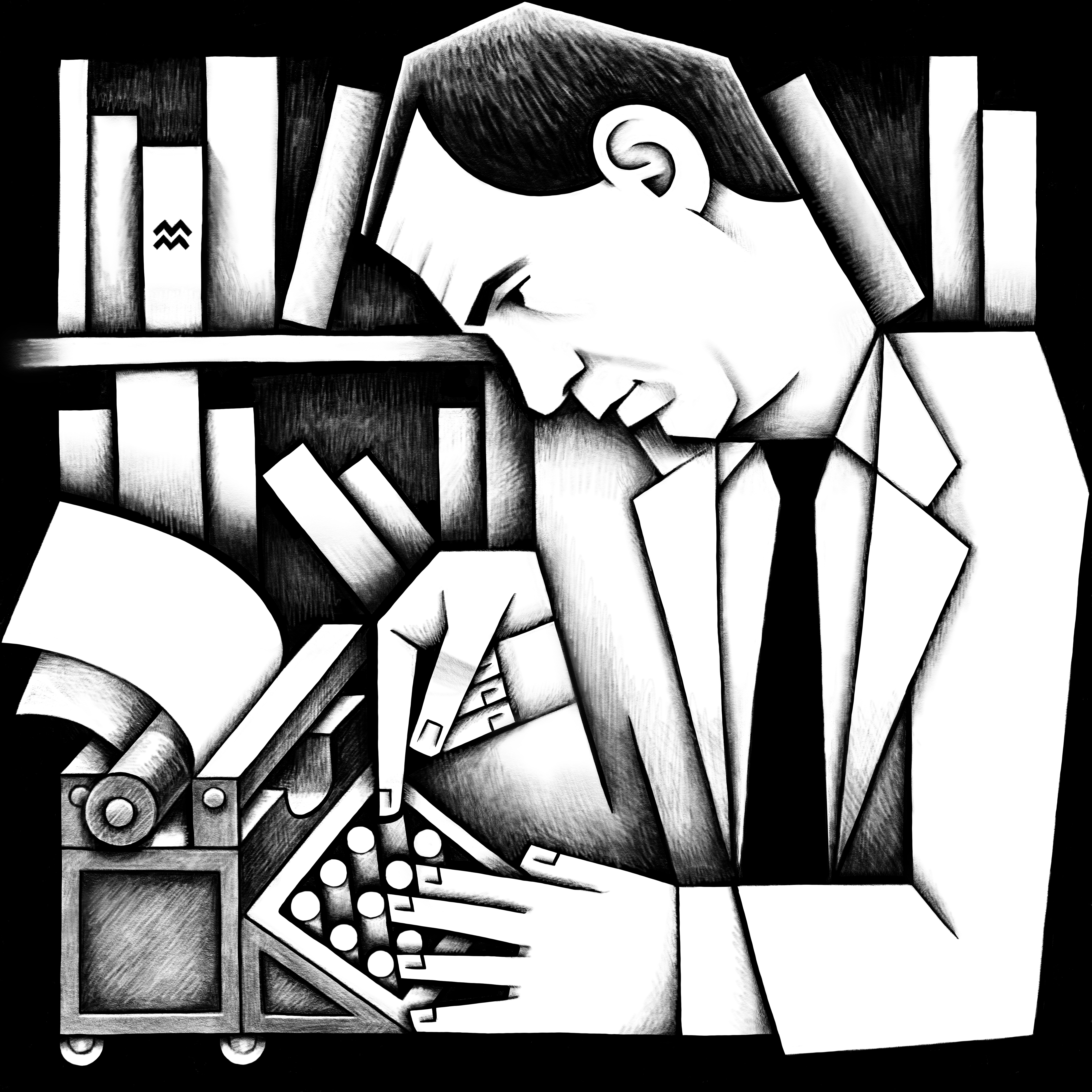
Klang Association Write Paper 4.0
>KLANG ASSOCIATION
WRITE PAPER 4.0
The email came like a blast of cold lightning. It was our overseas colleague again. For months she had returned our encouragement in the form of self-mutilation.
We leaned forward to read what she had to say.
She had written acid to those who assassinated paragraphs, posing new frontiers. Code, criticism, and curriculum vita, literature as ad copy for the product of the writer. "The trouble with the Unknown is you have to read it" one of their scholars admitted. She was driven through the back of the desert by that automobile. He understood her, she saw the infinite. She saw that literature was more like desert than an agriculture. She had to get lost and risk her life to explore even a small shard. But her compatriots couldn't stop feuding themselves.
That was to be our last correspondence. Hers was a professional suicide. In the closet of a conference hotel's empty room, the maid was horrified to discover, hanging from a coathanger, her suit. It was hard for us to accept that those tendons that once manipulated mice, lungs that once assigned homework, eyes that once scanned monographs for evidence of foregone conclusions, this vital vector of force that we thought would someday have its own office in the clean modern corridors of a university building, its name on the door, all of it, this human form, should be dissipated, gone. We could no longer look forward to seeing it exhale water vapor and carbon monoxide above a podium, its lungs accordioning with that sublime miracle, unconscious biorhythms working against the impulses of the conscious mind as it read aloud a paper without varying intonation or pausing to inhale at the periods. These fingertips that writhed alive, stuck with the fluorescent petals of post-its, whose esophagus once guzzled cocktails with visiting scientists, whose mind was capable of interviewing applicants and nailing into place footnotes, were now a white glove folded in the jacket pocket of an empty hangered suit and a briefcase gathering dust in a closet. To surrender to an imaginative text is to cede status. Afraid of monsters in their depths, her colleagues avoid the oceans, walk the beach with their reflection and a pail of plastic jargon. She drowned in the irresistible undertows, gave up being a writer to write. She dissolved, shed her theoretical form, and became pure practice.
So we typed a response:
Comrade, we appreciate your struggle. Now stop struggling.
They are axiomatic. Text is the sixth sense, one we block out in everyday life order to be successful and not fall to our knees every time we see a newspaper machine. Reading is neither active nor passive, it is an imaginative act. This immersion is as precarious as sleep or hypnosis, and embellishing an extended text through new media innovations is like the way your alarm clock embellishes your dreams with its stimulating electronic music and blinking colored lights.
You can do anything you can imagine on a screen. But, despite this, the issue for us was, simply, how computers might, for all their wonders, actually improve upon the experience of reading fiction from a book? Books tend to be more than one page long. Their words are written to be read. Legibility is transparency. Reading is of necessity visual, but the experience of hearing a text aloud and the experience of reading it have more in common than do reading the book and watching the movie. Text adds, image subtracts. The imagination can atrophy and with it our hope of figuring out a better way to live. Books are typically experienced by thousands at low cost. The screen is hard on the eyes. The mouse is hard on the wrist. We have found that if we read when we eat, then we are certain to read at least once a day. We can't help that we also read while we wait, travel, and fall asleep, on the beach, in the woods, and in the bath. Computers are unpleasant. Scrolling with a scrollbar or PAGE DOWN key is clunky, repetitive motion. Quoth Powers: The book is ergonomically perfect; literature has always been more threatened by cinema than computers.
By 2005, it was still taboo to us whether it was easier to read black-on-white or white-on-black screen text--or whether this choice affected how the words meant--or which interface designs might allow the reader to control the text without ergonomic strain or the temptation to click through rather than read.
We endorse theater and graffiti. We don't have to uphold the book as a dominant or default literary paradigm to respect and wish to see continued the work it has done and the contents it has delivered to us across the centuries, or to ask why, if we can fit the canon on the head of a pin, we would still rather own ridiculous amounts of paperbacks, no matter how often we are forced to move, than own the end of a pin if we have to poke our eyes out to read it. Finally it is possible to speak of the text (file) literally, platform-independently, as we did during the last centuries of book literature. Now we can install the canon on our hard drives, but not yet in our minds. There may never be a way around reading, and there may never again be fewer excuses not to. The electronic fiction platform of the future is the plain text file, whatever wondrous contraptions are used to open it and render its markups. So far we feel that the serious questions of upholding the virtues of book literature in the electronic realm have been answered mostly by eliminating content.
Reading is good for everybody. Literature is important because human beings and their unpredictable relations are inherently interesting. Computers and their predictably random behavior are not interesting in this way. As people we care about people more than machines. Writing by machines is not inherently interesting, neither is a string of randomly-generated numbers, though a human being may take an interest in it, which is sometimes interesting. Ideas exist, and can exist in language the way nutrition can exist in food, but an ingenious new method of packaging food is not yet nutritious. A machine that fills cans with vitamins is not yet food. Those who promote output as literature should eat randomly-generated food, aleatoric cuisine. Video games are for children. To be discouraged from playing. Their market share is not an index of the value of their contribution to the problem of being human. While they may have devices stolen from literature, there is more poetry in sports. We consider videogames a tool of social control and can't afford them. Human beings are part of an ecological system, and both print and electronic literature must exist within this system long after they survive the failed economic experiment of late corporate capitalism. Great art combines familiar and unfamiliar elements. The cutting edge gets blunt quickly. What is the advance guard doing while its armies are retreating in defeat? We must consider that they have joined the enemy.
The Klang Association stands for intelligible, legible, affordable, reliable, meaningful electronic literature. We seek to render the computer screen as transparent as it is designed. A simple wineglass, the lens must disperse literature's aroma and broadcast its pure color.
We don't live in her country. The sense of powerlessness we engage when locked into the imagination of another writer is better than state television and no worse than watching the trains taking our children to war. Poverty widens, expending resources in fraudulent wars. Hard lives and bad schools erode literacy, making even old-fashionable or commercial fiction unintelligible to most citizens, making the questions literature sometimes asks or answers bitingly urgent. We don't need virtual reality, we would rather have cilantro in our supermarket and a slow dialup. Since the revolution, we seized back our cultural data. As the internet yet had no structure efficient enough to silence us, we formed a collective of writers, composers, and digital technicians to archive canons to our citizens, who don't get enough to read. It is this light--narrative imagination applied to omnipresent threats of war, displacement, flood, poverty, or a better life--our computer screens cast.
>Klang Association conducts legibility studies in electronic fiction. Our methods are aesthetic, not scientific.
Anna Klang
>Klang Association
2006